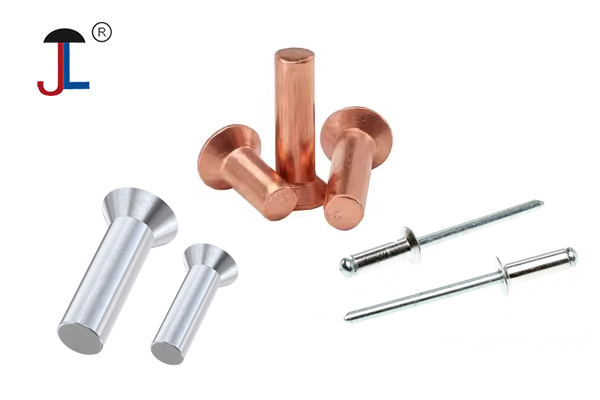
Countersunk Head Rivet

Countersunk Head Rivet

Whether you need standard models for mass production or customized countersunk head rivet tailored to specific materials, dimensions, or finishes, Jiliang® provides flexible solutions to meet your exact requirements.
Explore our full range of countersunk rivets, compare specifications, and request a quote to secure the best fastening solutions for your needs.

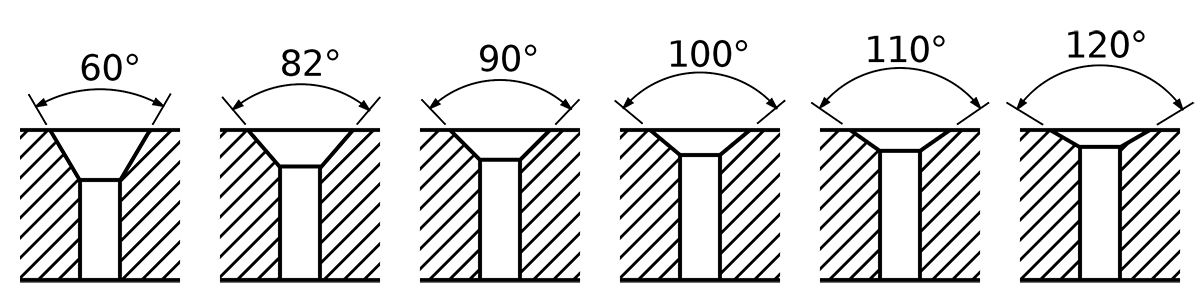
countersunk rivet angle styles include the following:
Countersunk Solid Rivets: 60°/ 82° / 90° / 100° / 110° / 120° countersunk, and flathead,round head
Countersunk Pop Rivets:60°/ 82° / 90° / 100° / 110° / 120° countersunk
Countersunk Blind rivets: 60°/ 82° / 90° / 100° / 110° / 120° countersunk
 
We offer countersunk rivets in a variety of materials:
Steel
Stainless Steel
Brass
Copper
Monel
Inconel
Aluminum 

GET A QUOTE

Countersunk Head Rivet Drawing

We don’t just manufacture rivets — we design them to fit your exact needs. Our professional engineering team provides custom countersunk head rivet drawing services, helping you transform your concept or sample into a precise, production-ready design.
Whether you need a standard countersunk rivet drawing or a fully customized solution, Jiliang delivers fast, accurate, and OEM-ready designs to support your project.
Countersunk Head Rivet Drawing

Countersunk Rivet Dimensions

We offer fully customizable solutions to meet your exact project needs. With a wide range of diameters, shank lengths, and head angles (60° / 82° / 90° / 100° / 110° / 120°), and materials including aluminum, steel, stainless steel, and copper, each countersunk head rivet can be tailored for customizable. Custom drawings and specifications are welcome.

Rivet Diameter (D) Head Angle (°) Head Diameter (A) Head Height (K) Shank Length (L) Typical Drill Size Material Options
1/8" (3.2 mm) 60° 0.210" (5.3 mm) 0.045" (1.1 mm) 0.125"–1.0" (3–25 mm) #30 Aluminum, Steel, Stainless Steel
1/8" (3.2 mm) 82° 0.216" (5.5 mm) 0.040" (1.0 mm) 0.125"–1.0" (3–25 mm) #30 Aluminum, Steel, Stainless Steel
1/8" (3.2 mm) 90° 0.218" (5.5 mm) 0.038" (1.0 mm) 0.125"–1.0" (3–25 mm) #30 Aluminum, Copper, Stainless Steel
1/8" (3.2 mm) 100° 0.219" (5.6 mm) 0.036" (0.9 mm) 0.125"–1.0" (3–25 mm) #30 Aluminum, Steel, Stainless Steel
1/8" (3.2 mm) 110° 0.225" (5.7 mm) 0.032" (0.8 mm) 0.125"–1.0" (3–25 mm) #30 Aluminum, Stainless Steel
1/8" (3.2 mm) 120° 0.230" (5.8 mm) 0.030" (0.75 mm) 0.125"–1.0" (3–25 mm) #30 Aluminum, Stainless Steel
5/32" (4.0 mm) 100° 0.265" (6.7 mm) 0.045" (1.1 mm) 0.157"–1.0" (4–25 mm) #20 Aluminum, Copper, Stainless Steel
3/16" (4.8 mm) 100° 0.312" (7.9 mm) 0.054" (1.4 mm) 0.157"–1.25" (4–32 mm) #11 Steel, Aluminum, Stainless Steel
1/4" (6.4 mm) 100° 0.406" (10.3 mm) 0.072" (1.8 mm) 0.25"–1.5" (6–38 mm) F Steel, Monel, Stainless Steel
3.0 mm 120° 5.0 mm 1.0 mm 3–20 mm 3.1 mm Aluminum, Copper
4.0 mm 120° 6.5 mm 1.2 mm 4–25 mm 4.1 mm Aluminum, Stainless Steel
5.0 mm 120° 8.0 mm 1.5 mm 5–30 mm 5.1 mm Aluminum, Stainless Steel
6.0 mm 120° 9.5 mm 1.8 mm 6–35 mm 6.1 mm Steel, Stainless Steel
Buy Countersunk Rivet in Bulk & Save!
We offer competitive wholesale pricing for bulk orders of Countersunk Head Rivet. Get custom sizes and specifications tailored to your needs.

GET A QUOTE

📞 Need assistance? Call us at [+8616676517879] or email [sales5@jiliang988.com].


FAQs

What is a countersunk rivet

A countersunk rivet is a type of fastener designed so that its head sits flush with or slightly below the surface of the material after installation. Unlike round-head or pan-head rivets, the countersunk rivet has a conical head—typically 90°, 100°, or 120°—that fits into a matching countersunk hole. View More

How to install countersunk rivets

To install countersunk rivets, you'll need countersunk rivets, workpieces, a drill with appropriately sized bits, a countersink tool matching the rivet head angle, a deburring tool (optional), and the correct rivet gun (either for solid rivets with a bucking bar or for blind/pop rivets). First, drill aligned holes through both workpieces. Then, use the countersink tool to create a recess in the top hole that matches the countersunk rivet head, ensuring it's deep enough for the head to sit flush. Finally, insert the rivet and set it using the appropriate rivet gun, ensuring a secure and flush finish. Key considerations include correct hole size, accurate countersink depth, proper rivet length, and material compatibility. View More

How do countersunk rivets work

Countersunk head rivet are designed to sit flush with the surface of the material, creating a smooth finish. They work by being inserted into a pre-drilled countersunk hole, where the rivet’s conical head aligns with the hole’s angle. When the rivet is deformed or compressed—typically by hammering or using a rivet gun—the shank expands and clamps the materials together securely. This makes them ideal for applications where a flat surface is essential, such as in aerospace, automotive, and precision machinery. View More

What are countersunk head rivets used for?

Countersunk head rivets are designed to create a flush, smooth surface after installation, making them ideal for applications where aesthetics and aerodynamics matter. They are commonly used in aviation, automotive, shipbuilding, and metal fabrication, as well as in furniture, electronics, and decorative projects. Their primary purpose is to secure two or more materials together while keeping the surface flat, preventing snagging or interference with moving parts. View More

What is the angle of a countersunk rivet head?

The countersunk rivet angle refers to the included angle of the rivet’s head, which allows it to sit flush with the surface after installation. Common angles include 60°, 82°, 90°, 100°, 110°, and 120°, chosen based on material thickness, load requirements, and aesthetic needs. Correct angle selection ensures a smooth surface, proper load distribution, and strong fastening, especially in precision applications. View More

How to choose the right size

  • Grip range: Match the rated range to the total material stack thickness.
  • Diameter and hole size: Use the recommended drill size for the series. Keep the hole just over body diameter and deburr both sides.
  • Materials: Aluminum for low weight, steel for economy strength, stainless for corrosion resistance. Consider galvanic compatibility with the joined metals.

GET A QUOTE

GET IN TOUCH NOW
×